


Consider this scenario:
Joe’s Zippymobiles, a fictional car dealership in the fictional American town of Springfield, buys a weekly full page ad in the local daily newspaper, the Springfield Daily Blather. The Zippymobile’s latest luxury sedan, the XYZ99, has a fatal design flaw that randomly causes those cars to burst into flames.
The publisher of the Blather takes the editor aside and says, “Bury that story about the XYZ99. We get a good percentage of our annual revenue from that dealership.”
In days of yore, the managing editor or the editor-in-chief or the editorial board, whose first responsibility is to the truth, would tell the publisher to stuff his advertising dollars where the sun don’t shine and would run a story about the fiery roadsters on the front page, perhaps including a local slant, making sure that the newspaper’s readers in Springfield were warned of the potential hazard. The responsibility to provide accurate information, particularly when there is a danger to a newspaper’s readers, would be front of mind.
Perhaps, also, because the tradition of keeping a firewall between the business side and the editorial side was mutually understood and was so integral to the operation of newspapers, the publisher might never have even asked the editor to sacrifice the paper’s editorial standards.
In 2024, editorial independence may seem like a quaint concept, particularly in light of the mega-corporations that exercise dominion over the vast majority of our news media. Over the years, the firewall has all but disappeared, slowly but surely.
But editorial independence existed for a reason. It helped ensure that the citizens of Springfield — and every other city and town that had a newspaper or media outlet — received the most accurate, least biased information possible.
Now consider a second more current (and actual) scenario:
The owner/publisher of the major newspaper in the nation’s capitol becomes uncomfortable endorsing a candidate for president, perhaps because he fears a backlash to his extremely successful other businesses that are completely unrelated to journalism or politics. Perhaps he also fears there might be backlash in the form of violence from the supporters of the candidate who was not going to be endorsed by the newspaper’s editors.
Or, more cynically, perhaps he has made a secret agreement with the candidate who was not about to be endorsed because he’s afraid of losing future government contracts. So he demands that the editors of his newspaper squelch the endorsement.
Now we’re looking at a very different set of circumstances, with consequences that reach well beyond the fictional community of Springfield. This scenario, of course, is a summary of what has transpired in recent days at the Jeff Bezos-owned Washington Post.
Management of the Washington Post has been trying to float a different narrative — that going forward they are refraining from endorsing presidential candidates. But it seems somewhat implausible that they would only come to such a decision less than two weeks before a presidential election. WaPo insiders have largely debunked that rationale, as well.
Moreover, readers of the Washington Post aren’t stupid. More than 200,000 subscribers have canceled their subscriptions (myself among them) — more than 8% of their total paid readership. In an era that supports an entire alt-right “news” infrastructure, it sounds a bit silly to say that there’s a relationship of trust between a purveyor of news and the consumer of news. That trust between the Washington Post and its readers has now been shattered. How can readers know that the information they’re getting from the Post hasn’t been tainted by some force other than the journalistic judgment of their award-winning writers and editors?
This isn’t the only recent example of a major American newspaper whose business tail has wagged the editorial dog. The Los Angeles Times’ owner, Patrick Soon-Shiong, killed a planned endorsement of Kamala Harris because he believed his judgment about Harris’ position on Gaza should supersede the judgment of his editors. You can almost hear Soon-Shiong, a biotech and investment billionaire, channeling Charles Foster Kane saying, “I think it would be fun to run a newspaper.”
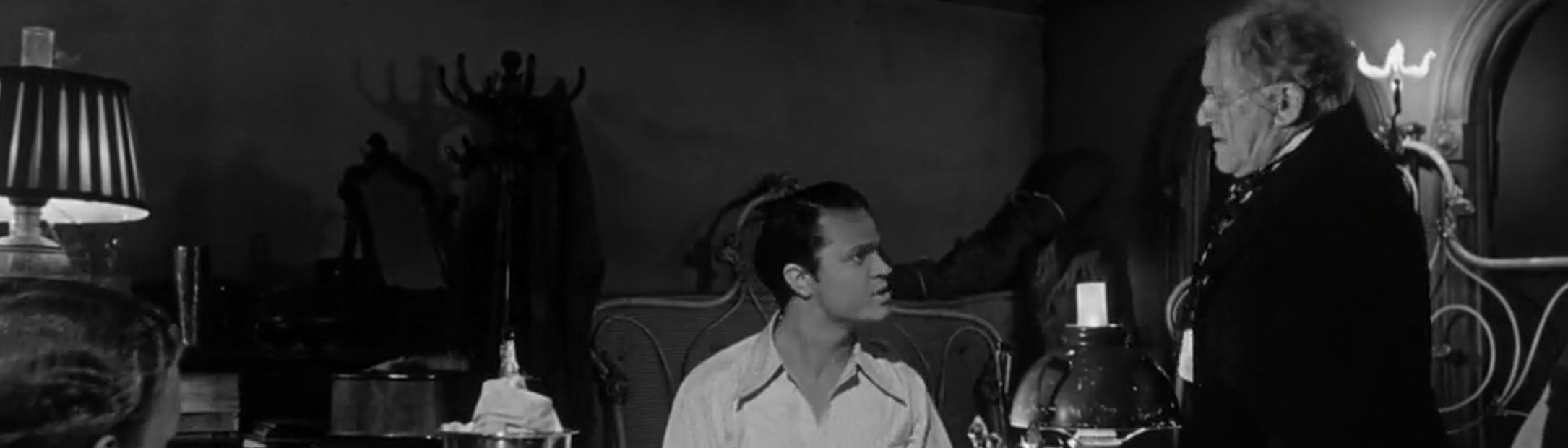
Pundits have been focusing largely on the outrageousness of these individual acts. But they’ve barely discussed these individual acts as symptoms of a larger more serious problem — the overall deterioration of our news media.
Editorial boards of two of the nation’s most widely circulated newspapers have been forced to capitulate to the owner’s personal business interests or opinions.
It should be noted, however, that there have been resignations of experienced, high profile editors at both of these newspapers.
But even those resignations are problematic. Those editors have had to make a difficult choice. If they were to stay, they would be tacitly sanctioning the dissolution of the barrier between the business interest and editorial integrity. By leaving, however, there are enabling the owners to usurp even more editorial control over content.
If you think these might be isolated instances or unique circumstances, think again. More and more state and regional newspapers are being bought up, not even by news syndicates or newspaper groups (like Gannett or Scripps) but rather by hedge funds.
For example, the nation’s oldest continuously published newspaper (since 1764!), The Hartford Courant, was bought in 2021 by Alden Global Capital, along with The Chicago Tribune, The Denver Post, The St. Paul Pioneer Press, The Boston Herald, The Mercury News, East Bay Times, The Orange County Register, and Orlando Sentinel.
Hedge funds aren’t steeped in newspapering traditions (which include editorial independence). A hedge fund’s first responsibility is to make money for its shareholders. Hence, it’s relatively easy to make the case that responsibility to the Constitution isn’t the first item on the to-do list for hedge fund managers.
It’s no coincidence that Alden Global Capital has forbidden the editorial boards of all those previously independent newspapers’ from making endorsements in presidential races, as well as senatorial and gubernatorial races. Money first, and freedom of the press be damned.
The free press is the only private enterprise mentioned in the Constitution. The concept of the “fourth estate” is that the nation’s founders intended for the press to provide independent oversight of the Judiciary, Legislative, and Executive branches of government. The founders knew that the checks and balances of three co-equal branches of government might not always be sufficient to safeguard the democracy that they were establishing. So they attempted to empower a free press to provide one more layer of protection.
But these days, it’s looking like even the founders’ best attempts may not be good enough.