


Peace, love, flower power. Sex, drugs, rock and roll. Turn on, tune in, drop out.
There was so much more to the era of the late 1960s and early 1970s than those stereotypes. Underlying those buzz phrases was an idealism, a tacitly agreed upon set of aspirations that a good percentage of a generation championed.
There’s a lot of criticism of that generation these days, most of which falls into the category of shortcomings. Some of that criticism may be justified. But there are still a lot of lessons to be learned from the groundswell of social and political activism that seemed to come about organically, as a response to what young people witnessed and experienced.
A new version of political activism arose in the anti-war movement, in the civil rights movement, in the women's rights movements, in the environmental movement, and in the then-nascent gay rights movement. The common thread in all that activism was a challenge to a stagnant status quo, side by side with a sincere belief that this generation of hippies could make the country and the world into much better places.
Hippies weren’t just random, unintentional outsiders; hippies turned themselves into outsiders by behaving and dressing differently than their predecessors and many of their peers and, more importantly, by challenging widely accepted beliefs and norms.
Hippies in large part were baby boomers but by no means were all baby boomers hippies. Plenty of boomers fought and died in Vietnam. Time seems to have narrowed the chasm between those who enlisted or were drafted and those who protested the war itself. Time and perhaps maturity has taught us that we were all subject to the same governmental and societal systems and the same resulting pressures.
My grading is decidedly unscientific, but I have tried to base the grades on what I’ve observed as to how close each of these movements has come to achieving the goals and aspirations of the youth and young adults of the Vietnam War era.
You may notice that there is not a single A on this report card. But I’m a glass-half-full kind of person so, while I acknowledge the progress has been slow and all the goals of that generation have not necessarily been achieved, it’s still progress.
It’s also worth remembering that the same monied forces that have prevented more progress from being made continue to preventing progress — only now they are even wealthier, stronger, and better connected politically.
Anti-War Movement
Positives
Widespread unrelenting protests placed pressure on government officials, which ultimately helped bring Vietnam War to an end.
The protest movement created more awareness and an elevated consciousness about the futility of war.
The protests, along with television media being present in the theatre of war for the first time, called attention to some of the atrocities of war. There started to be fissures in the prevailing mindset that, no matter what the United States did militarily, it was somehow justifiable. “My country, right or wrong!”
Negatives
There has been an almost unbroken chain of additional undeclared wars ever since Vietnam, including:
The Persian Gulf War
Iraq War
Military intervention in Bosnia-Herzegovina
War in Afghanistan
The unintended consequence of the draft being abolished after the Vietnam War was that the all volunteer military has created or exacerbated classism in the U.S. Lower income people with limited opportunities are far more likely to enlist than more privileged people. It’s no coincidence that the military has a much higher percentage of minorities in its enlisted ranks than the population at large does.
The U.S. has historically been a warring nation, from its earliest days to the present. As a by-product, this war mindset has created a nation with many citizens believing that all problems can be solved by violence and dominance.
The “military industrial complex” that Eisenhower first described is still in full swing. Much of our tax money allocated to military spending goes to military vendors and suppliers in all fifty states. Consequently, there is little incentive for Congresspeople to rein in military spending because it may mean the loss of jobs in their own states or districts.
Overall Grade: D
Women's Rights
Positives
Overall, there are more opportunities for women in the workplace, and women are in more positions of authority than ever before. It’s not uncommon to have a female mayor or CEO or police chief or small business owner.
The roles available to women in the military have expanded, although this is another sign of progress that may be at risk in the next administration.
There is greater societal acceptance of stay-at-home dads. This is part of a larger trend where gender plays less of a role in employment.
Negatives
The Equal Rights Amendment (ERA) still hasn’t been passed. It’s been more than fifty years since its inception and some of the states that recently ratified the Amendment have been ruled invalid because those ratifications came after the original deadline for ratification.
Women still haven’t achieved equal pay for equal work. Pay parity is still elusive and there seems to be little legislative movement in that direction.
Abortion rights have backslid dramatically since Roe v. Wade was overturned. Access to overall reproductive healthcare has gotten swept up in the misguided zeal of the religious right and their fervor to do away with abortion altogether, sometimes with fatal consequences.
The nation still has not had a female President, unlike other developed nations. This is particularly stinging after the 2024 election, where we had an unqualified convicted criminal male running against a woman who had better qualifications for the job of President than anyone in recent memory.
Overall Grade: C-
LGBTQ+ Rights
Positives
The Stonewall riot in 1969 was a watershed moment in LGBTQ+ history, one that paved the way for much broader, if slow, acceptance of queer people.
Grassroots activism around AIDS forced progress at the federal level and created a model for activism on other LGBTQ+ issues.
The United States established marriage equality in 2015 with the SCOTUS decision in Obergefell v. Hodges. (However, that decision is very much at risk with the incoming administration.)
Negatives
Trans rights and equal treatment are at extreme risk, with hundreds of misguided anti-trans laws passed at the state level. The incoming administration has foreshadowed an extreme anti-trans bias, and anti-trans hate crimes have spiked.
There is still thinly-veiled workplace discrimination, leading to LGBTQ+ people not being hired based on some other false premise, as well as a “pink ceiling” leading to lack of equality in promotions.
Overall Grade: B-
Civil Rights/Racial Justice
Positives
The Civil Rights Act of 1964 and the Voting Rights Act of 1965 provided some hard-won gains for Black people.
In 1954, the Brown v. Board of Education U.S. Supreme Court ruling made school segregation illegal.
Redlining laws have been overturned at the federal level with the Fair Housing Act of 1968. There have been somewhat more opportunities in hiring for members of minority communities and it has been marginally easier for minorities to be upwardly mobile.
Negatives
It should be noted that the most legislative progress was made 6 or more decades ago. It should also be noted that simply having the laws on the books has not remedied the ills they were intended to address. Far from it. Every effort seems to have been made to circumvent the laws and weaken their impact to ensure that white people remain as the dominant culture.
The Voting Rights Act of 1965 has been significantly watered down. The fundamental right of every U.S. citizen to have a voice in their government has been made more difficult through a long list of state and local laws designed specifically to disenfranchise voters of color. Many of those laws have been upheld by the Supreme Court. Congressional districts in several states have been gerrymandered with the intention of minimizing Black representation in Congress.
Systemic racism still permeates the culture, the consequences of which are evident everywhere, from health care outcomes to disparities in pay to inequity in lending practices to, most visibly, a law enforcement and justice system that favors white suspects and defendants. The murder of George Floyd brought this into sharp and undeniable focus, but the list of Black Americans who have been killed by law enforcement is long, disproportionate, and indefensible.
Not only have affirmative action laws and practices been challenged in court and overturned, there are many on the right who have publicly and intentionally mischaracterized the nature of affirmative action to mean that unqualified people receive jobs or admission to academic institutions.
Overall Grade: F
Environment
Positives
George H.W. Bush participated in 1992 Rio summit and later ratified the resulting United Nations Framework Convention on Climate Change (UNFCCC) agreement.
Electric vehicles are being more widely used. More and better technologies are being developed and are becoming cost effective.
Wind turbines in all 50 states provide approximately 10% of the nation’s electricity.
There is a small segment of the population who have adopted the “living on the land”/"back to the garden" aspiration of the late ‘60s/early ‘70s. There are organic fruits and vegetables (as well as packaged foods) in virtually every grocery store.
Coal consumption is down, as a percentage of power generated.
Climate change was barely on anyone's radar in '60s and '70s; now it's being dealt with globally (although the U.S. lags far behind other developed nations).
At least 25 U.S. states have mandatory recycling laws.
Negatives
The U.S. has refused to participate in the Kyoto Protocol or the Paris Agreement.
Fracking (hydraulic fracturing) to produce natural gas has been done in 30 U.S. states; only 5 states have banned fracking.
Recycling percentages are still low, despite mandatory recycling laws.
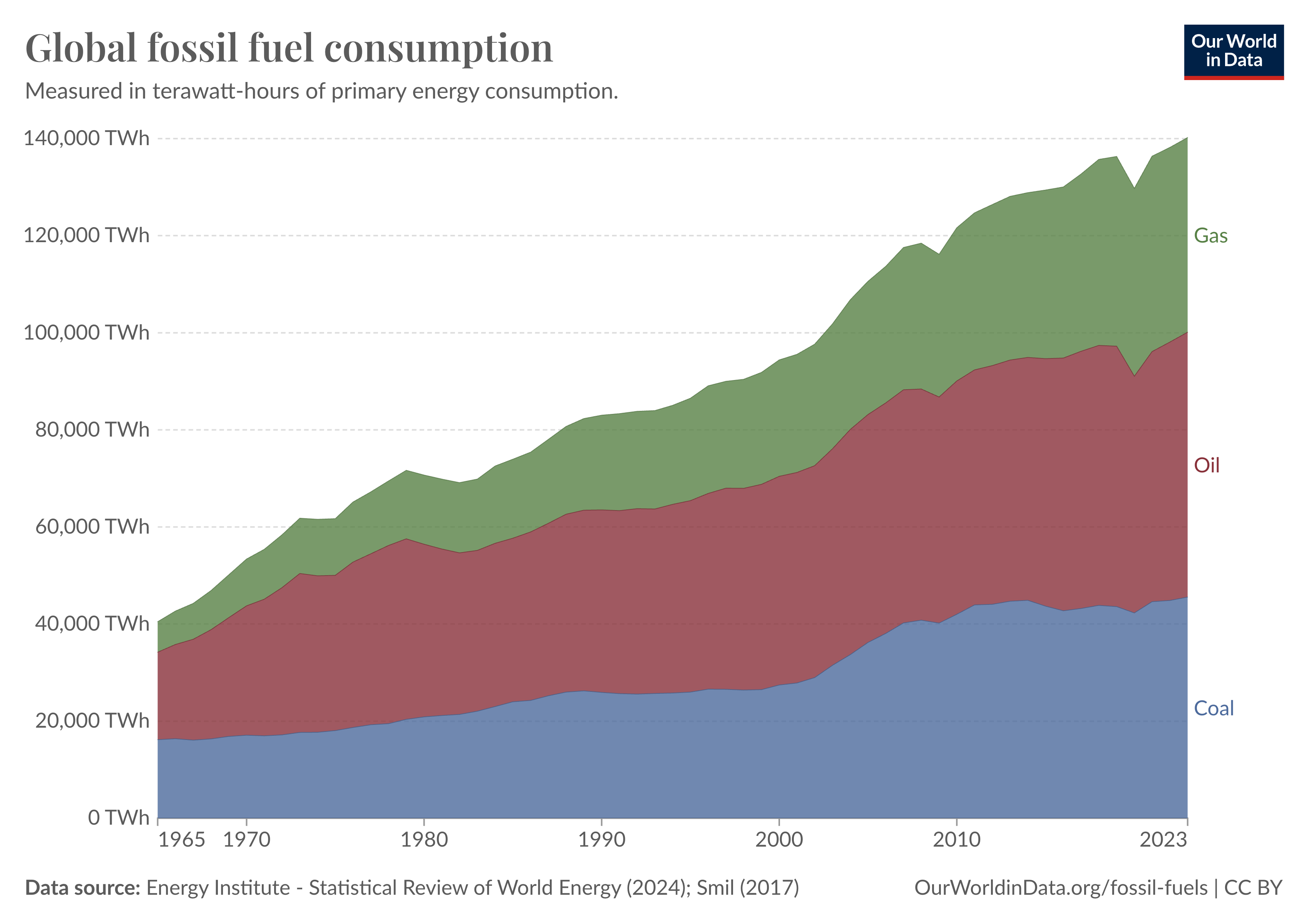
Use of fossil fuels continues to rise, despite increased usage of other cleaner energy sources (wind, solar, hydro).
Overall Grade: D+
My lists of positives and negatives are far from comprehensive. I’d love to hear your thoughts and your grades, especially if they disagree with mine. Please leave them in the comments.
Excellent piece! I would downgrade the LGBTQ rights one grade (C-) based on the recent use of trans people as a (winning) political tool appealing to hate, coupled with a resurgence of violence against the community since MAGA started