

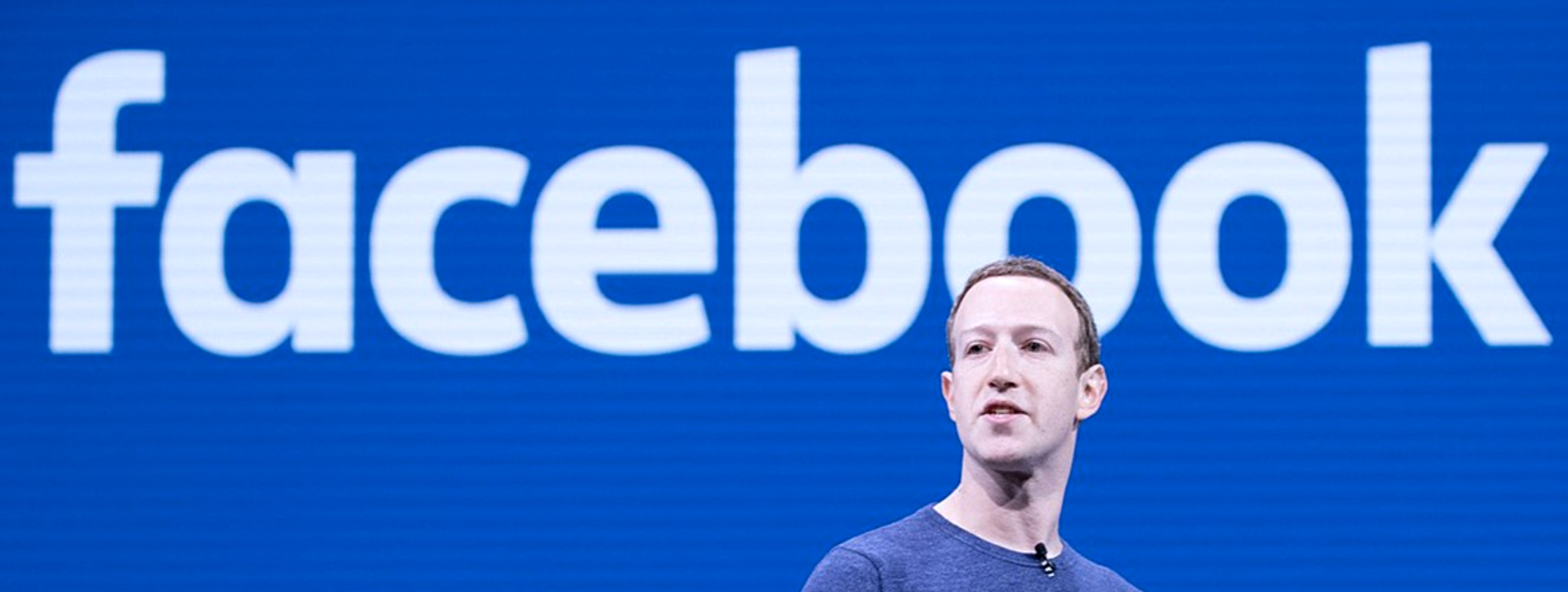
One of the more noteworthy headlines this week is Mark Zuckerberg’s announcement that Facebook would no longer be fact-checking posts, leaving the monitoring instead to the Facebook users in the form of “community notes” — the model that X/Twitter adopted after Elon Musk fired all of that platform’s content moderators.
Facebook users already live in silos of information that are geared specifically toward their existing views. Social and political biases have been targeted and magnified from the day a subscriber signs up. What happens when the algorithms that direct posts to people already likely to be receptive of those posts now expect those same people to fact-check misinformation that supports their existing biases?
For example, if I add a post or a response to a post on a right-leaning subscriber’s page stating that Joe Biden set fire to the Lincoln Bedroom before leaving the White House, are that subscriber’s other right-wing followers really the best people to fact check that post?
Taking it a step further, are people who are into risqué or even illegal forms of pornography the best people to moderate posts that may include such content?
No content moderation method is foolproof but Meta is moving away from a method that works in some cases to one that is virtually guaranteed to be far less effective.
But this politically-driven accommodationist change at Meta raises the larger question: What do we really need Facebook for? In fact, what do we need any social media platform for? Are we trading off things that are difficult or impossible to recover — privacy, peace of mind, democracy — for a steady drip, drip, drip of dopamine?
We’re now well over a decade past the publication of The Shallows: What the Internet Is Doing to Our Brains, Nicholas Carr’s examination of the effect of the internet on our ability to think and reason and process information. Many of the downsides of internet addiction or obsession are already well documented.
The more recent development of those individualized information silos that people live in is even more troubling. Fox News may have been an early adopter of lying for profit, but the lies wouldn’t have achieved the traction that they’ve had without the exponential magnification they’ve received on social media.
Add to the mix the fact that your data is harvested and sold by Facebook and other social media companies so that advertisers can target you with specific ads. All it takes is a single search in a search engine for “left-handed widget wrench” and seemingly instantaneously you’re served ads on Facebook and all the other platforms for left-handed widget wrenches.
Serving you targeted ads is one of the more benign outcomes of data harvesting. There’s probably no one with an email address who hasn’t had their personal information show up in at least one data breach. Identity theft is now commonplace, and the consequences can be devastating.
Then there’s the time-sink phenomenon. Those algorithms that feed you information the data giants believe you’re interested in are also designed to keep you engaged, so you can see even more of those ads for left-handed widget wrenches. The longer you stay on their sites, the more times you click or scroll, the more money they make.
To restate an idea from the early days of television advertising, “if your social media doesn’t cost anything, then you are the product.”

If anyone thinks Mark Zuckerberg operates with noble motives, don’t forget that his first venture into social media was a site called “Facemash,” the sole purpose of which was so that his fellow male students could rate female Harvard students for hotness. He hacked into Harvard’s internal systems to obtain the photos of female students without their consent so that those photos could be used in Facemash.
Facemash eventually morphed into “TheFacebook” at Harvard and then morphed again into the public sphere as simply “Facebook.” In its early days, it was touted as a way to get in touch (or stay in touch) with friends in different parts of the country and, eventually, around the world.
The desire for autonomy and self-regulation isn’t new at Facebook. Zuckerberg has objected to every attempt at regulating in content. That was never more evident than when Zuckerberg testified in front of Congress in relation to the Cambridge Analytica data harvesting of Facebook user data. Zuck’s position then was one of public neutrality. But the data harvesting first reported in 2015 was used to benefit Trump’s presidential campaign.
It’s sort of a full-circle moment for Zuckerberg to now be taking a hands-off approach to content moderation, the end result of which will be to enable the worst kind of misinformation to propagate on Meta’s platforms, once again to benefit Trump and his cronies.

Does this mean I’m about to go “cold turkey” from all social media? That’s pretty unlikely. But I already “quiet quit” Facebook many months ago. I still review other folks’ posts from time to time and, once in a while, I’ll even post something myself.
I cut off all ties with X/Twitter right after the November election. I’m still on Substack (obviously) and a few others that, so far, haven’t shown signs of supporting autocracy.
But this recent development at Facebook is just one more reminder for all of us to be informed consumers of information and not to reward companies that use our presence to make the world a worse place.